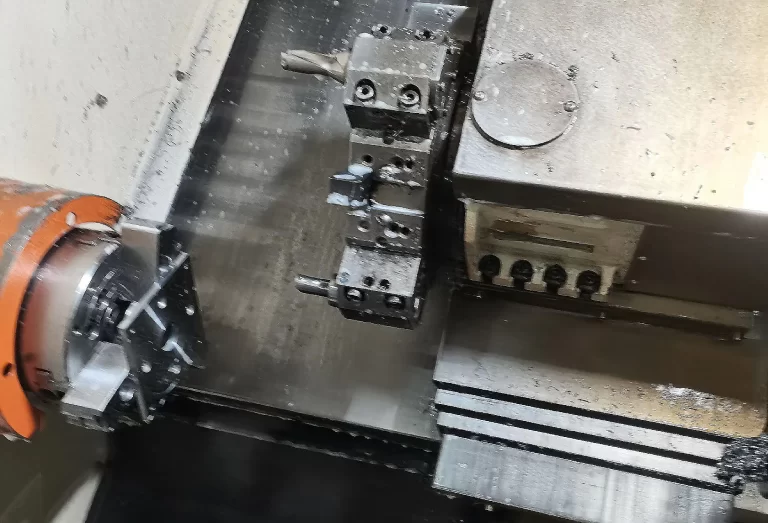
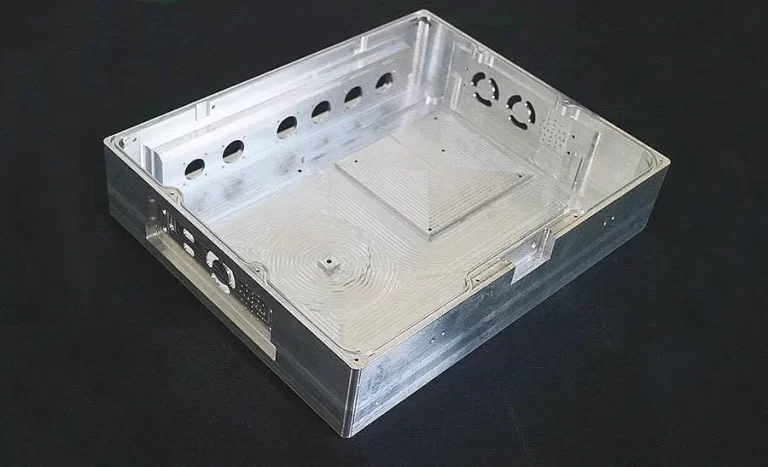
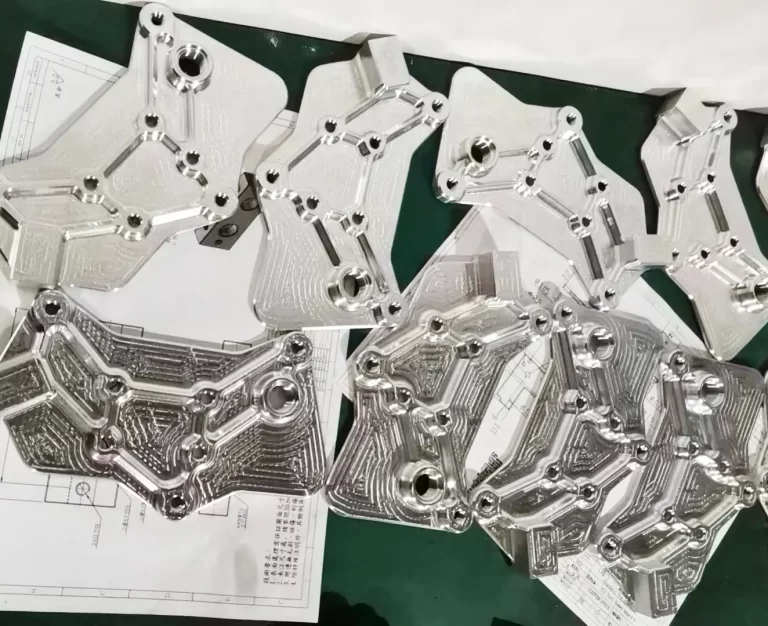
Thin-walled parts have structural characteristics that affect their machining. They are less rigid when machining on a CNC lathe.
As a result, several issues arise, such as difficulty positioning the workpiece. The parts are also prone to deformation after machining.
Additionally, it is challenging to ensure the surface roughness of the parts.
With the continuous development of the machinery manufacturing industry, the machining technology of 🗡 class parts has made significant progress.
The traditional processing method of thin-walled parts is complex. It struggles to meet the technical requirements of the products due to poor machining quality and low precision.
In contrast, CNC turning machining is widely used in the machinery manufacturing industry.
This method improves the accuracy of the products, reduces the number of work processes, and shortens the production cycle.
Therefore, reasonable fixture design, optimization of cutting parameters, and other measures can solve problems in the processing of thin-walled parts.
The article mainly analyzes and explores the thin-walled parts of the CNC turning machining process, using this information to design thin-walled parts of the jigs and fixtures.
Thin-walled set of parts structure and processing requirements
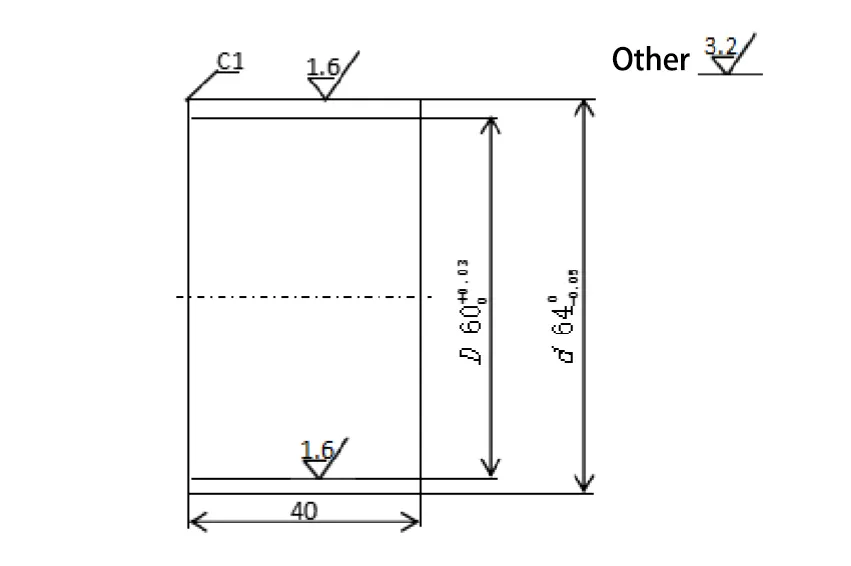
As shown in Figure 1, the thin-walled set of parts is made from No. 45 seamless steel pipe. The diameter of the outer circle is 640 mm, with a tolerance of (0 / -0.05) mm.
The diameter of the inner hole is 60 mm, with a tolerance of (+0.03/0) mm. The wall thickness of the part is 2 mm, and its length is 40 mm.
The entire part requires very high accuracy in diameter, form, and surface smoothness.
Figure 1 shows that the difference between the outer diameter and inner diameter of the part shown is 4mm, and the dimensional accuracy of the inner hole is the biggest problem.
Due to their poor rigidity, low strength, and easy-to-produce deformation during machining, verticality and coaxiality are crucial for ensuring the workpiece’s surface quality.
A special clamping method is designed to address the characteristics of thin-walled parts, such as poor rigidity and easy deformation.
This clamping ensures that the part’s dimensions, form, and position errors meet the technical requirements specified in the drawings.
In addition, the selection of tools, the arrangement of process routes, and the choice of process clamping methods also directly affect the processing quality of the product.
Machining process analysis and design
Generally speaking, sleeve parts are used to support the rotor shaft or shaft parts. They may also play a guiding role in the assembly.
The main performance parameters of such products include the size and roundness of the inner and outer circles.
Other important factors are the coaxiality of the inner hole and the specific inner hole requirements. Additionally, the verticality of the drilled holes is a key consideration.
Due to their small wall thickness, thin-walled sets of parts have very small radial stiffness in the cutting force, cutting heat, and clamping force.
This makes them easy to deform, making it difficult to guarantee the above technical indicators.
To solve the above problems, the clamping method, cutting dosage, and tool geometry angle of thin-walled parts have been studied.
Analysis of thin-walled parts machining
Clamping is the basic link of CNC machining, mainly divided into positioning and clamping.
Positioning and clamping interact; the two are not divided into primary and secondary. The quality of parts processing has the same important impact.
If the conventional clamping method, not the positioning and clamping sequence requirements, leads to greater deformation, then its quality can not be guaranteed.
Therefore, when clamping thin-walled parts, the typical process is to position first and then clamp.
This method usually increases the support surface of the workpiece and the clamping area.
Alternatively, it can increase the number of clamping points. These adjustments help ensure the force is uniform, reducing clamping pressure and contact stress.
In addition, you can add some auxiliary support to improve the stiffness of the machined object.
For example, the use of special jaws or free transition ring clamping can be implemented. This helps increase the number of clamping points or the clamping zone.
Clamping with a liquid plastic automatic reset chuck or a spring chuck ;
Change radial clamping to axial clamping so that the clamping force is concentrated in the more rigid axial direction, thus preventing large deformation in the radial direction.
Machining process and equipment analysis
Division of machining stages
The machining of thin-walled parts can be divided into three stages: roughing, semi-finishing, and finishing.
First of all, rough machining of certain small surfaces of the workpiece is necessary to meet the workpiece’s surface quality and the uncertainty of the accuracy requirements.
Secondly, semi-finishing is utilized to obtain the required accuracy and machining allowance before finishing.
Finally, the surface of the thin-walled bushing parts must meet the process requirements specified in the drawings to ensure the quality of the outer circle.
Finish machining is used to achieve this. This process ensures the required accuracy and smoothness.
Machining process
The size and machining of thin-walled parts are highly precise, but due to the thin wall of the parts, they have poor rigidity and easy deformation, making them more difficult to manufacture.
As mentioned above, the machining surface of a thin-walled bushing part includes several features. These features include the outer circle, inner hole, and left and right end surfaces.
To process these surfaces, rough turning, semi-finish turning, and finish turning are required. This applies to both the outer circle surface and the left and right end surfaces.
Since the thin-walled sleeve parts do not have too many machining items, and can be obtained after the end of machining to be inspected.
Fixture design and analysis
General requirements of fixture design
The basic idea of fixture design is to use clamping and positioning techniques. The goal is to adjust the clamping method to solve positioning and clamping problems.
This approach is specifically applied during the processing of thin-walled parts.
In production, the different clamping methods can lead to deformation and dimensional instability of the parts.
For this situation, using general-purpose workholding fixtures can realize the positioning and clamping of parts. Using the fixture design of the thin-walled parts machining process route :
First, use the general-purpose tooling fixture positioning, after adjusting the position, in the special fixture for processing.
When turning thin-walled parts on a CNC lathe, deformation occurs due to the cutting force.
To prevent this, it is essential to ensure the correct positioning and clamping of the parts. This requires the use of special fixtures on the CNC lathe.
According to the process roadmap, ensuring the quality of thin-walled parts processing is crucial.
To achieve this, the parts must be correctly clamped. Proper clamping and positioning are essential for accurate processing.
It is essential to maintain the center axis of the surface being machined, especially when machining the surface of a rotary body.
This axis should be aligned with the axis of rotation of the machine’s spindle. By doing so, the position of the surface can be accurately determined.
In addition, the clamping device should be able to provide an appropriate clamping force and have good self-locking.
The method of applying pressure should be considered to not cause the fixture to deform.
Specific technical requirements of the fixture
In addition to the general technical requirements, the fixture should comply with the following criteria.
(1) Sufficient rigidity and strength:
The fixture should be able to withstand the machining process’s cutting force, clamping force, etc., to prevent deformation and vibration and ensure the parts’ machining accuracy.
(2) Accurate positioning:
The fixture should provide a high-precision positioning reference to ensure the accuracy of the parts’ positions in the machining and reduce positioning errors.
(3) uniform clamping force:
The clamping force should be evenly distributed to avoid a localized clamping force that is too large and deforms the parts. Multi-point clamping, pneumatic, or hydraulic clamping can be used.
(4) Low-stress clamping:
Reduce the additional stress generated by the clamping to avoid deformation of the parts after processing due to stress relief.
(5) Good chip removal performance:
The design of work holding fixtures should not hinder the discharge of chips to prevent their accumulation, which can affect machining accuracy and surface quality.
(6) Work fixture and machine tool connection reliability:
Ensure that the fixture can be firmly installed in the CNC machine tool and easily loaded, unloaded, and fastened.
(7) Good workmanship:
Easy to manufacture, assemble, commission, and maintain.
(8) High stability:
The fixture’s structure and performance must remain stable in machining, free from cutting heat, vibration, and other factors.
Several factors must be considered to the specific structural characteristics of thin-walled parts.
These include processing technology, machine performance, and other relevant factors.
The above technical requirements should be considered for comprehensive design optimization in practical applications.
Clamp structure design
Due to the’ high machining accuracy requirements of thin-walled parts, special attention must be paid during clamping.
After a force is applied, clamping and positioning deformation can easily occur.
Therefore, the fixture design should aim to use a smaller clamping force. An integral structure is recommended to utilize the fixture’s rigidity and strength fully.
The fixture structure includes table, compression screw, set screw, movable screw and positioning pin. Among them, the compression screw is mainly used to clamp the workpiece;
Fixed screws are mainly used to secure the parts in place. When using a sleeve-type fixture, the number of compression screws should be reduced.
Compression rings and positioning pins can be matched with spring washers to achieve this. This combination helps improve the fixture’s service life.
Activity screws are mainly used to adjust the position of the parts in the machining process, to prevent deformation of the parts;
Positioning pins are mainly used to adjust the position of the parts during the machining process.
After clamping the parts, the positioning pin from the workpiece can be pressed to remove and center the parts with spring washers.
To ensure the dimensional accuracy and positional accuracy of the workpiece processing, the fixture must be set on the fixed screws, compression screws and movable screws.
At the same time, designing guide pins and locating pins to ensure that the workpiece can be well-positioned after machining is necessary.
In addition, a positioning pin can be designed on the compression ring to prevent the parts from deforming during cutting.
Optimization of fixture cutting parameters
The machining process of thin-walled parts is prone to deformation due to the rigidity of the machine tool fixture, the machining process route, and the tool selection.
Therefore, special attention should be paid to the reasonable arrangement of the clamping sequence in the machining process to avoid deformation caused by clamping.
Cutting parameters should be optimized to ensure the parts’ dimensional and positional accuracy.
In actual production, it is essential to prevent deformation during workpiece clamping and cutting.
To achieve this, the depth of cut should be appropriately reduced. At the same time, the cutting thickness and feed volume should be increased.
Based on theoretical analysis and practical experience, optimal cutting parameters can be determined.
When the depth of cut is between 0.4 and 0.6 mm, and the feed is between 0.2 and 0.3 mm/r, the final finishing depth of cut should be controlled at around 0.2 mm.
When the depth of cut is more than 0.6 mm and the feed rate is more than 0.4 mm/r, the feed rate can be increased appropriately.
Analysis of machining results
In the machining process, improving the clamping method effectively solves the problem of part deformation.
This is especially important for thin-walled parts, which are prone to deformation during machining.
As mentioned above, such parts’ dimensional and positional accuracy requirements are high.
In addition, the work fixture uses a center-positioning clamping method, which effectively avoids errors caused by processing deformation.
As a result, it ensures the accuracy of the processing size and position.
Clamping during the actual processing to prove that the thin-walled sleeve parts, after machining, size, and positional accuracy, align with the drawings’ requirements.
At the same time, the fixture can effectively solve the deformation problem of thin-walled parts in the CNC turning process.
Implementing the fixture ensures the workpiece’s size and positional accuracy and improves its positioning and clamping capacity.
As a result, labor intensity is significantly reduced, and production costs are lowered.
Conclusion
The article on the thin-walled parts of the CNC machining process carried out a systematic study, analyzing the structural characteristics of thin-walled parts and machining difficulties.
Through a deep analysis of the machining process, the thin-walled parts produce deformation factors.
Through the design of fixtures and optimization of parameters, the deformation of thin-walled parts can be effectively prevented to ensure the machining accuracy.
At the same time, the deformation of thin-walled parts can be effectively reduced. This can be achieved by adopting appropriate machining methods.
Additionally, reducing the friction and collision between the tool and the workpiece material during the cutting process also helps minimize deformation.
The contact area between the tool and the workpiece material should be minimized in the machining process to improve the tool’s durability.
This can effectively prevent the deformation of thin-walled parts.